



A Research Hub Where Diverse Knowledge Fuses to Create Innovation. Research Institute for Electronic Science Awaits Your Challenge
Research Institute for Electronic Science (RIES) integrates knowledge from diverse fields such as physics, chemistry, materials science, life sciences, information science, and mathematical sciences to promote innovative research that transcends traditional academic boundaries.
RIES offers an ideal learning environment for students aspiring to become researchers in various fields, including industry, academia, and national research institutes.
Here, students have the opportunity to learn directly from world-renowned faculty while engaging in cutting-edge research.
With state-of-the-art research facilities and an environment where researchers from diverse fields come together, students can not only deepen their expertise, but also pursue new discoveries and collaborative research across disciplines.
- Learn and grow alongside world-class researchers
- Utilize cutting-edge research facilities to tackle a wide range of themes
- Collaborate with researchers from different fields and contribute to the creation of new science
Why not expand your potential at RIES?
We look forward to the day we can conduct groundbreaking research together with motivated individuals like you to shape the future.
A Research Hub for Pioneering New Science with Creative Ideas and Cutting-Edge Technology.

RIES pursues innovation in electronic technologies to explore uncharted territories in electronic science, advancing research through free-thinking beyond conventional boundaries and diverse methodologies.
In addition to pioneering research in semiconductor materials, devices, and green transformation (GX), RIES engages in a wide range of themes including energy conversion materials, environmental sensing, AI-enhanced nanoscale measurement, healthcare devices, and biological behavior control. Our distinctive research style integrates cutting-edge technologies such as quantum photonics, nanotechnology, and mathematical analysis.
- Faculty members from diverse specialties come together, fostering active interdisciplinary collaboration.
- We actively embrace new ideas and technologies to produce pioneering results.
- Through research, we contribute to the advancement of both academia and industry.
Supporting Your Growth to the Fullest Alongside World-Class Research.
At RIES, we not only advance cutting-edge research but also dedicate ourselves to nurturing the next generation of students through these experiences.
Our faculty, experts in their respective fields, cultivate your knowledge and practical skills through a wide range of undergraduate and graduate courses as well as hands-on research guidance.
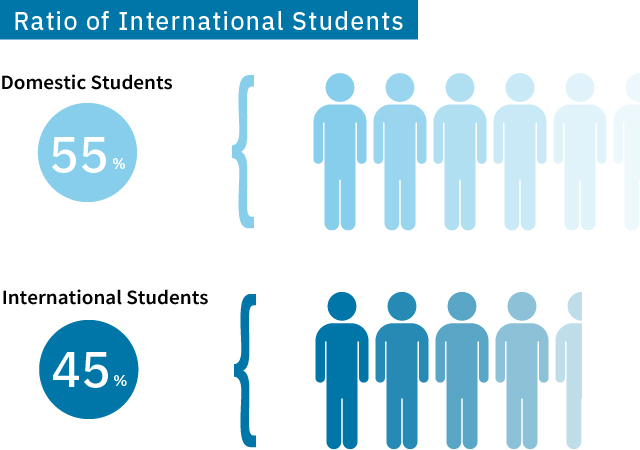
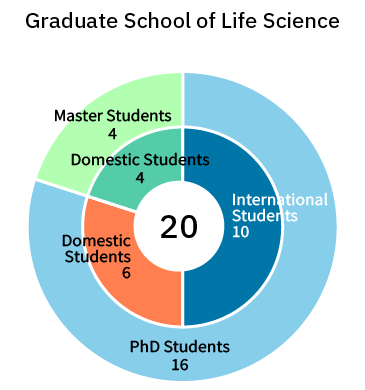
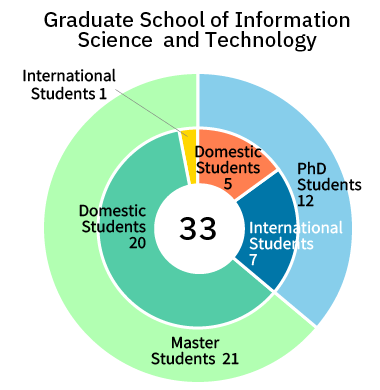
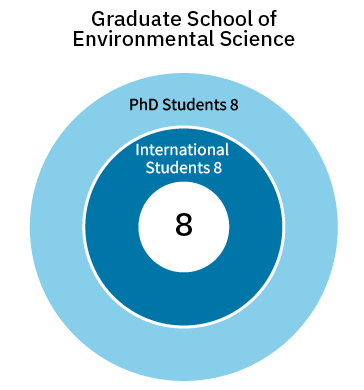
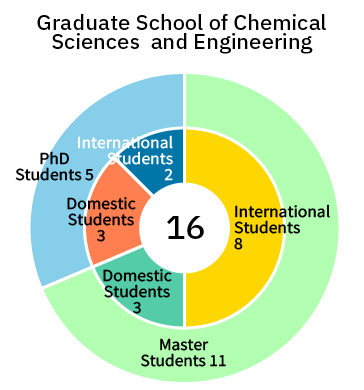
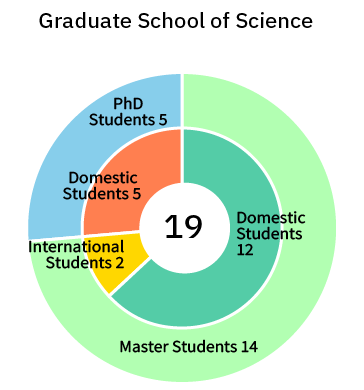
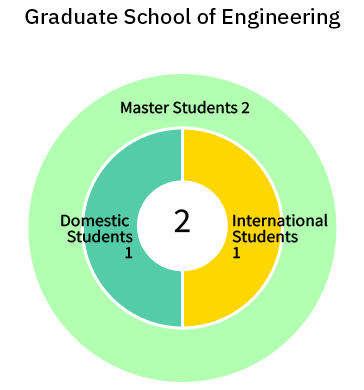
- Approximately 100 students deepen their expertise by engaging directly in cutting-edge research.
- Through advanced research, you can develop the skills needed to succeed on the global stage.
- With dedicated guidance and a supportive environment, we fully support your growth.
Why not take your first step toward becoming a world-class researcher or engineer at RIES?
We warmly welcome your ambitious challenge.
Let’s tackle cutting-edge research that changes the world and open the doors to new science together.

-
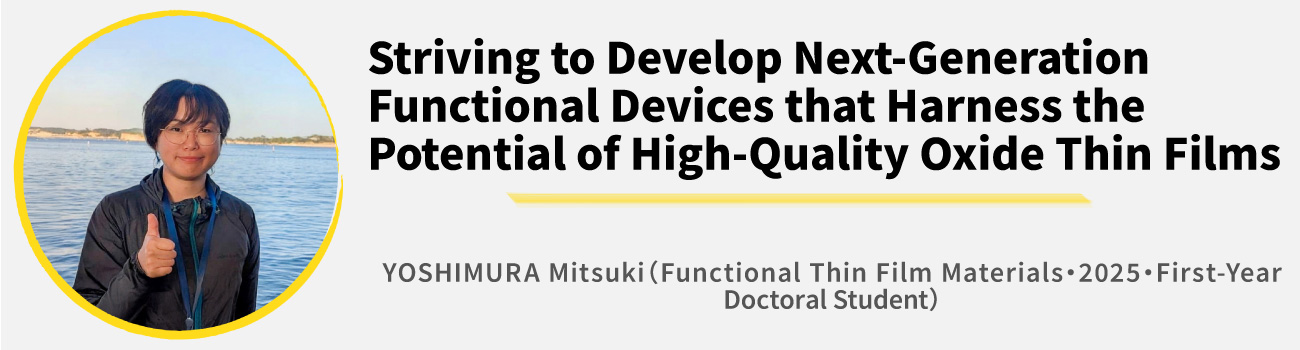
I am Mitsuki Yoshimura, a PhD candidate at the Laboratory of Functional Thin Film Materials (Prof. Ohta Lab). At Ohta Lab, we specialize in fabricating high-quality oxide thin films with atomically flat surfaces to develop next-generation functional devices.
Currently, I am developing “thermal switches” by electrochemically controlling the physical properties of oxide thin films. This research is deeply rewarding, combining the scientific challenge of unravelling thermal behaviors with the engineering novelty of dynamic control. I hope our work will contribute to the advancement of thermal management technologies.
RIES provides a vibrant international exchange and an interdisciplinary environment. Simultaneously, the serene nature surrounding the campus offers a perfect retreat for deep reflection. If you wish to settle into this peaceful environment and take on the challenge of unknown frontiers, I encourage you to visit our lab and experience this atmosphere for yourself.
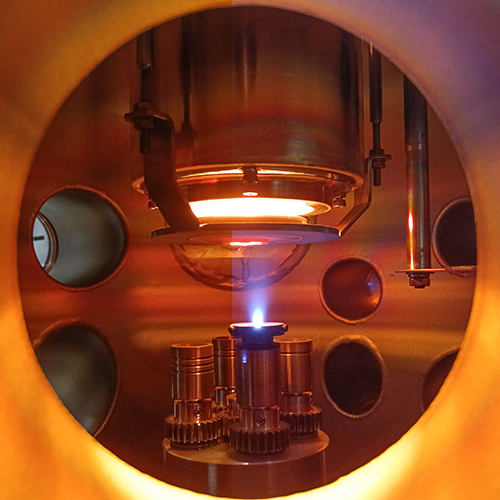
Thin film fabrication via Pulsed Laser Deposition (PLD) method. A bluish-white plume” is observed through the vacuum chamber window as the oxide target is irradiated by the laser. This plume expands toward the substrate positioned above, forming a high-quality thin film with atomic-level precision. 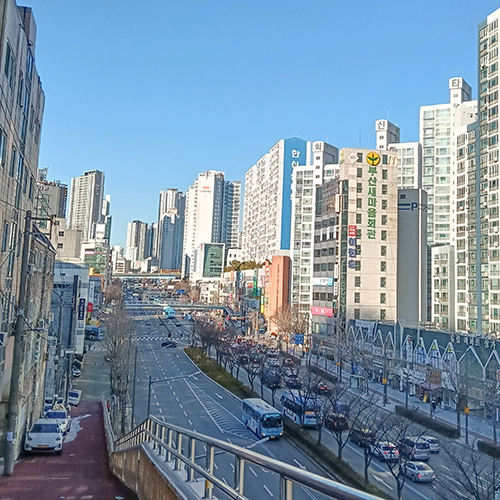
OA view captured while walking from my hotel to the airport during a trip. Whenever I have free time alone, I prefer to travel on foot as much as possible, whether I have a destination or not. Even in my daily life, the university campus is a perfect place for a walk; wandering aimlessly until my Walkman’s battery finally runs out is my latest obsession.
-
My name is Natsume Motohashi, a first-year doctoral student in Professor Nagayama’s laboratory. Since my undergraduate years, I have been fascinated by mathematical modeling of natural phenomena — using equations to uncover the universal laws behind complex events.
My current research focuses on the mathematical analysis of self-propelled motion driven by surface tension. I study how a substance creates a surface-tension gradient at the liquid interface and moves spontaneously due to that non-uniformity — a camphor fragment on water being a classic example. This field is actively studied worldwide and has promising future applications in medicine, such as drug delivery systems. I strive to contribute these insights to society.
RIES brings together researchers from physics, chemistry, biology, and mathematics — an ideal interdisciplinary environment for this work. We warmly welcome anyone considering joining us to visit the laboratory.
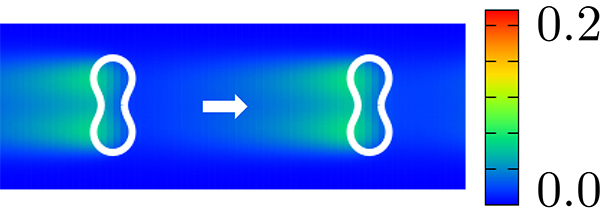
This figure shows the time evolution of a dumbbell-shaped self-propelled object and the surfactant concentration at the water surface, obtained from numerical simulations of our mathematical model. The white line denotes the object’s boundary, and the heatmap denotes the surfactant concentration. 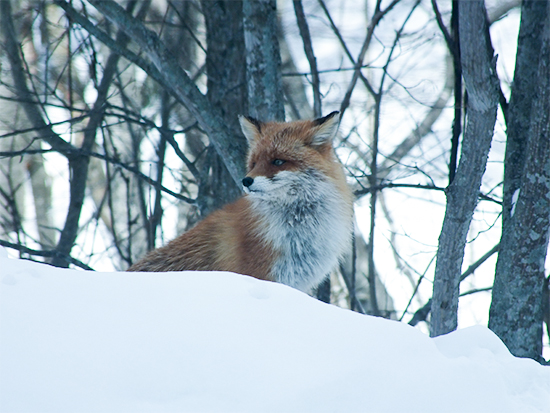
One of my hobbies is taking pictures. This is a photo of an Ezo Red Fox I encountered on Mt. Teine.
-
My name is S L Aneesha, and I am a Ph.D. student in the Laboratory of Photonic Nanomaterials under Prof. Biju at the Research Institute for Electronic Science (RIES), Hokkaido University. I was inspired to join RIES because of its interdisciplinary research environment, where chemistry, physics, and materials science converge. I chose the Laboratory of Photonic Nanomaterials for its research on semiconductor nanoparticles and quantum dots, integrating photophysical analysis with advanced time-resolved spectroscopy techniques to gain deeper insights into excitonic and charge carrier dynamics.
My research focuses on halide perovskite nanocrystals and their assembly into supercrystals. I investigate how these nanoscale building blocks are precisely aligned and how charge carriers interact within these ordered supercrystals to develop high-quality quantum optical materials.
Looking ahead, I aim to advance quantum nanomaterials research as an academic scientist and dedicated teacher. To students considering RIES, it offers world-class research facilities within a dynamic and international academic community.
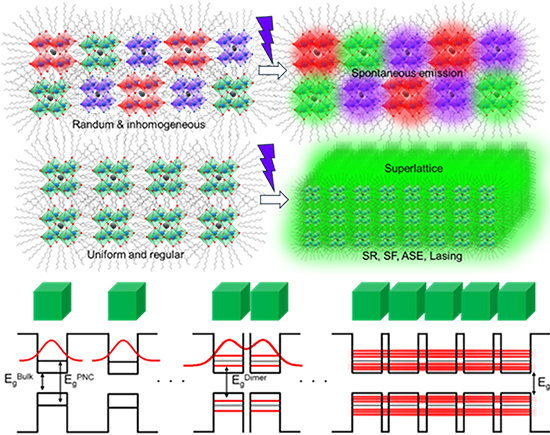
This image, from my publication in Chem. Soc. Rev, 2025, 54, 9585, demonstrates how nanocrystals assemble into highly ordered superstructures, resulting in collective optical emission. 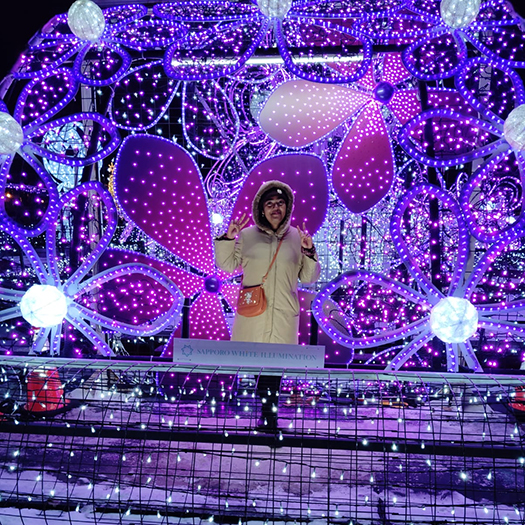
Enjoying festivals and the climate in Hokkaido
-
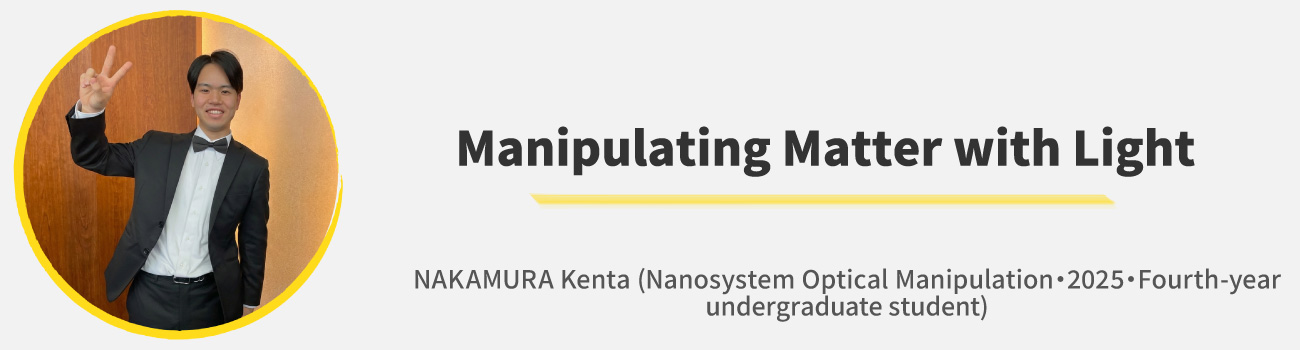
I’m Kenta Nakamura from the Nanosystem Optical Manipulation group. I chose this lab because I am fascinated by research that uses light to control matter—such as optical tweezers and nano-actuators—and because Prof. Tanaka’s phrase, “Let’s work on truly interesting research,” strongly resonated with me.
My current research focuses on optical angular momentum, the “rotation” carried by light. I aim to develop a new measurement system and use it to reveal spin–orbit angular momentum conversion caused by interactions between light and nanostructures. In simple terms, I am building a tool to measure the rotational information of light and understand how nanoscale structures modify it.
After completing my master’s program, I plan to pursue a PhD and advance this work toward a deeper understanding of light–nanostructure interactions. If possible, I would also like to gain international experience through overseas research, presentations, and collaborations.
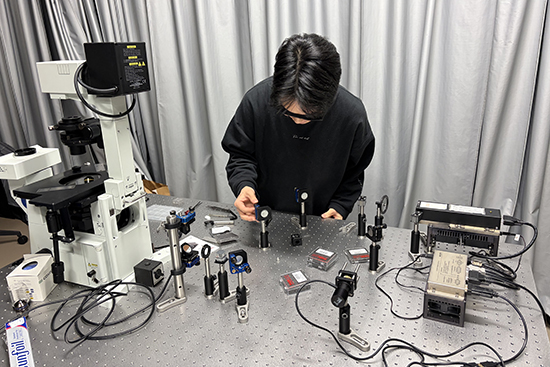
Adjusting the optical system in the laboratory. A key strength of our lab is the ability to conduct optical experiments using nanostructures fabricated in-house to investigate light–matter interactions. 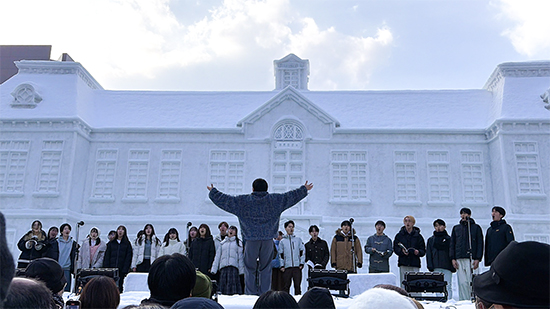
Singing is one of my hobbies. During my undergraduate years, I was a member of the Hokkaido University Mixed Choir. This photo shows a performance on the stage in front of the snow sculpture of Furukawa Hall at the 2026 Sapporo Snow Festival.
-
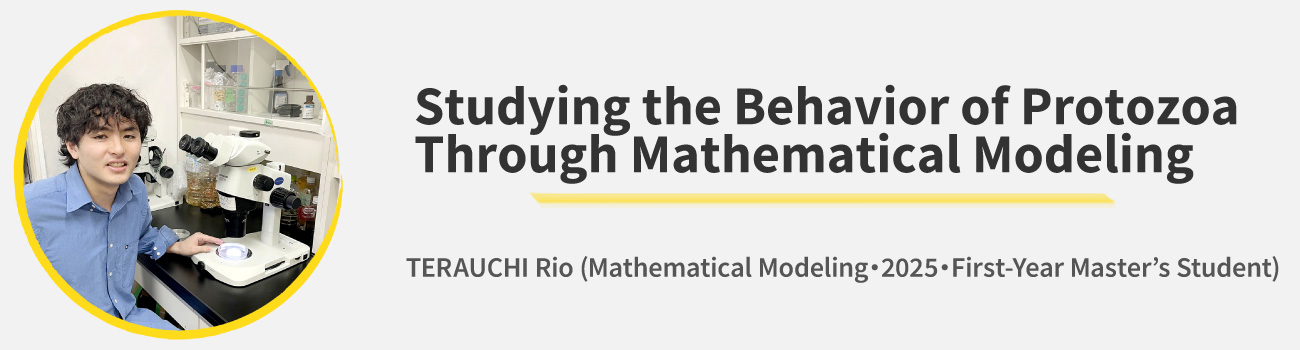
I am Rio Terauchi, a first-year master’s student in the Nakagaki Laboratory, where members study the behavior of protozoa such as amoebae using mathematical models and physical methods. I chose this lab because I am interested in elucidating life phenomena from mathematical and physical perspectives.
Currently, I am measuring the force (traction force) exerted on the ground by Amoeba proteus, a type of large amoeba, as it walks and moves across the surface. When we let the amoeba walk on a gel substrate embedded with beads, the gel deforms under the cell’s forces, causing the beads to move. By analyzing the displacement of these beads, we can estimate the magnitude and location of the traction force generated. We expect that clarifying the relationship between the spatial distribution of traction force and cell movement will not only deepen our understanding of cell movement mechanisms but also lay the groundwork for applications such as the development of soft robotics based on these principles. Moving forward, I plan to pursue doctoral studies and engage in international research activities.
RIES offers an environment where one can engage with cutting-edge, interdisciplinary research. Within a relatively flexible research style, it fosters the ability to independently set research goals and act. For those interested in joining the Institute, I highly recommend visiting the laboratories to experience the research atmosphere firsthand.
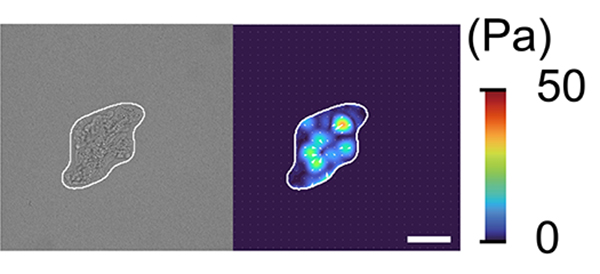
A bright field image of Amoeba proteus (left) and the traction stress field generated by the cell (right). The white line in the left image indicates the cell outline. In the right image, the color represents the intensity of traction stress, and the arrows show the direction of the stress. scale bar = 100 µm. 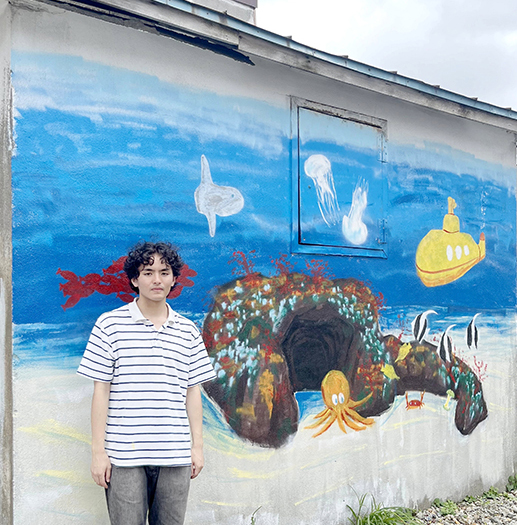
I painted a mural at my part-time job. Because the part-time job is related to music, the mural is inspired by The Beatles, one of my favorite bands. The mural is at Kita 24-jo, so please have a look at it if you have a chance.
